
A clogged drain is one of the most common household plumbing problems, and your first instinct might be to reach for a bottle of chemical drain cleaner. Before you do, consider this: chemical drain cleaners contain caustic substances like sodium hydroxide and sulfuric acid that can corrode your pipes, damage septic systems, and pose health risks to your family. The good news is that most household drain clogs can be cleared safely and effectively without chemicals.
Why You Should Avoid Chemical Drain Cleaners
Chemical drain cleaners work by creating a chemical reaction that generates heat to dissolve clogs. While this sounds effective, the process comes with serious downsides:
- Pipe damage: The heat generated by chemical reactions can soften PVC pipes and corrode older metal pipes. Repeated use weakens pipe joints and can cause leaks.
- Septic system harm: The harsh chemicals kill the beneficial bacteria in septic tanks that break down waste. Many Fort Myers homes in unincorporated Lee County rely on septic systems.
- Health hazards: Chemical drain cleaners produce toxic fumes, can cause severe burns on skin contact, and are dangerous if splashed in eyes. They are one of the leading causes of household chemical injuries.
- Environmental impact: The chemicals eventually enter the water supply and can harm aquatic ecosystems in Southwest Florida’s sensitive waterways.
- Temporary fix: Chemical cleaners often only punch a small hole through a clog rather than fully clearing it. The clog returns within weeks.

Method 1: Boiling Water
The simplest method works surprisingly well on grease and soap buildup, which are the most common causes of kitchen and bathroom sink clogs in Fort Myers homes.
- Boil a full kettle or pot of water.
- Remove any standing water from the sink if possible.
- Pour the boiling water directly down the drain in two or three stages, allowing a few seconds between each pour.
- The heat melts grease and dissolves soap scum, allowing the clog to flush through.
Important: Do not use boiling water on PVC drain pipes or porcelain sinks, as the extreme heat can damage them. Use very hot (not boiling) tap water instead. This method works best on metal pipes and drain lines.
Method 2: Baking Soda and Vinegar
This classic combination creates a fizzing reaction that breaks up organic clogs without harming your pipes:
- Pour 1/2 cup of baking soda directly into the drain.
- Follow with 1/2 cup of white vinegar.
- Cover the drain opening with a wet cloth or drain plug to contain the fizzing reaction inside the pipe.
- Wait 30 minutes to one hour.
- Flush with hot water for 2 to 3 minutes.
For stubborn clogs, repeat the process two or three times. This method is safe for all pipe types including PVC, copper, and galvanized steel. It is also septic-safe and will not harm the beneficial bacteria in your septic tank.
Method 3: Plunger (The Right Way)

Most people own a plunger but do not use it correctly. Proper plunging technique makes a huge difference:
- Use the right plunger: A cup plunger (flat bottom) works for sinks and tubs. A flange plunger (with the extended rubber ring) is designed for toilets.
- Create a seal: Fill the sink with enough water to cover the plunger cup. Apply petroleum jelly to the rim of the plunger for a tighter seal.
- Block the overflow: In bathroom sinks and tubs, stuff a wet rag into the overflow hole. This prevents air from escaping and maintains suction.
- Plunge with force: Push down firmly, then pull up sharply. The pulling motion creates suction that dislodges the clog. Repeat 15 to 20 times.
- Test the drain: Remove the plunger and see if the water drains. If it flows slowly, repeat the process.
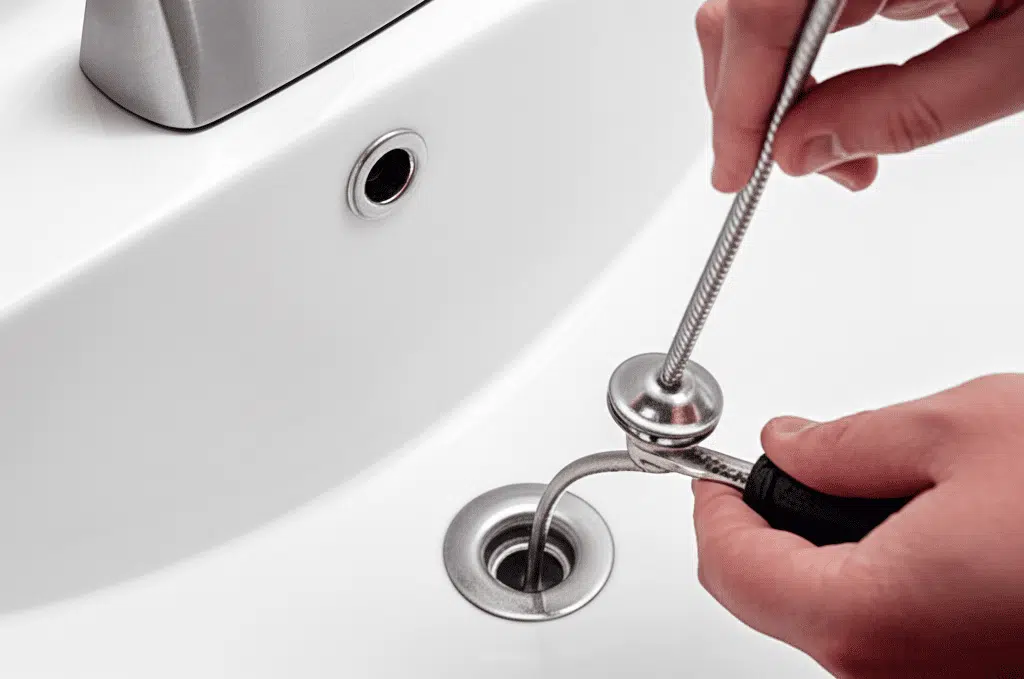
Method 4: Drain Snake (Hand Auger)
A drain snake is a flexible metal cable that physically breaks through clogs that plunging cannot clear. You can buy a basic hand auger at any hardware store in Fort Myers for $15 to $30:
- Remove the drain stopper or strainer.
- Feed the snake cable into the drain opening, turning the handle clockwise as you push.
- When you feel resistance, you have reached the clog. Continue turning while pushing to break through.
- Once through the clog, pull the snake back slowly. The debris will come with it.
- Run hot water for several minutes to flush the loosened material through the pipe.
Drain snakes work well for hair clogs in bathroom drains and food buildup in kitchen drains. For clogs deeper than 15 feet in the drain line, you may need a professional drain cleaning service with a motorized auger.
Method 5: Wet/Dry Vacuum
If you own a wet/dry shop vacuum, it can create powerful suction to pull clogs out of the drain:
- Set the vacuum to the wet (liquid) setting.
- Create a tight seal over the drain opening. The tighter the seal, the more suction power you get.
- Turn the vacuum on its highest setting.
- The suction can pull the clog material back up through the drain opening.
This method is particularly effective for hard clogs like small objects, compacted food, or dense hair clogs that resist other methods.
Method 6: Clean the P-Trap
The P-trap is the curved section of pipe under your sink. It is designed to hold water and prevent sewer gases from entering your home, but it is also where most sink clogs form:
- Place a bucket under the P-trap to catch water.
- Unscrew the slip nuts on both sides of the P-trap by hand or with pliers.
- Remove the P-trap and dump the contents into the bucket.
- Clean the inside of the P-trap with a brush and rinse it thoroughly.
- Inspect the pipe going into the wall for additional buildup and clean as needed.
- Reassemble the P-trap, tighten the slip nuts, and test for leaks.
Preventing Future Drain Clogs
The best way to deal with drain clogs is to prevent them from forming in the first place:
- Use drain screens: Mesh screens over drain openings catch hair, food, and debris before they enter the pipe.
- Never pour grease down the drain: Grease solidifies inside pipes and is the number one cause of kitchen drain clogs. Pour cooled grease into a container and throw it in the trash.
- Run hot water after each use: A 30-second flush of hot water after washing dishes helps keep grease moving through the pipe.
- Monthly baking soda maintenance: Pour 1/2 cup of baking soda followed by hot water down each drain once a month to prevent buildup.
- Keep food scraps out: Even with a garbage disposal, minimize what goes down the drain. Scrape plates into the trash first.
When to Call a Professional Plumber
If you have tried the methods above and your drain is still clogged, or if you are experiencing recurring clogs in the same drain, it is time to call a professional. Persistent clogs often indicate a deeper issue such as:
- Tree root intrusion into your sewer line
- A collapsed or broken pipe underground
- Buildup deep in the main sewer line that household tools cannot reach
- A venting problem that prevents proper drainage
A licensed plumber has specialized equipment including motorized drain snakes, hydro jetting machines, and video camera inspection systems that can diagnose and clear any clog. Professional drain cleaning not only clears the immediate blockage but identifies the root cause to prevent future problems.
Waterway Plumbing & Drain Cleaning provides professional drain cleaning services throughout Fort Myers and Southwest Florida. Call (239) 471-5068 to schedule service.

Frequently Asked Questions
What is the best way to unclog a drain without chemicals?
Start with boiling water for grease clogs, then try baking soda and vinegar. For stubborn clogs, use a plunger with proper technique or a hand drain snake. These methods are safe for all pipe types and will not damage your plumbing like chemical drain cleaners can.
Why do my drains keep getting clogged?
Recurring clogs are usually caused by grease buildup in kitchen drains, hair accumulation in bathroom drains, or a deeper issue in the main sewer line such as tree root intrusion. If the same drain clogs repeatedly after clearing, a professional video inspection can identify the root cause.
Is it safe to use baking soda and vinegar in drains?
Yes. Baking soda and vinegar are completely safe for all pipe types including PVC, copper, and galvanized steel. They are also safe for septic systems. The fizzing reaction is gentle enough to avoid pipe damage while effective at breaking up organic clogs.
Can a clogged drain fix itself?
In rare cases, a minor clog may clear on its own over time as water slowly dissolves the obstruction. However, most clogs worsen if left untreated because new debris continues to accumulate on the blockage. It is always better to address a slow drain promptly before it becomes a complete blockage.
Curious how much a drip costs? Try our Dripping Faucet Cost Calculator.


