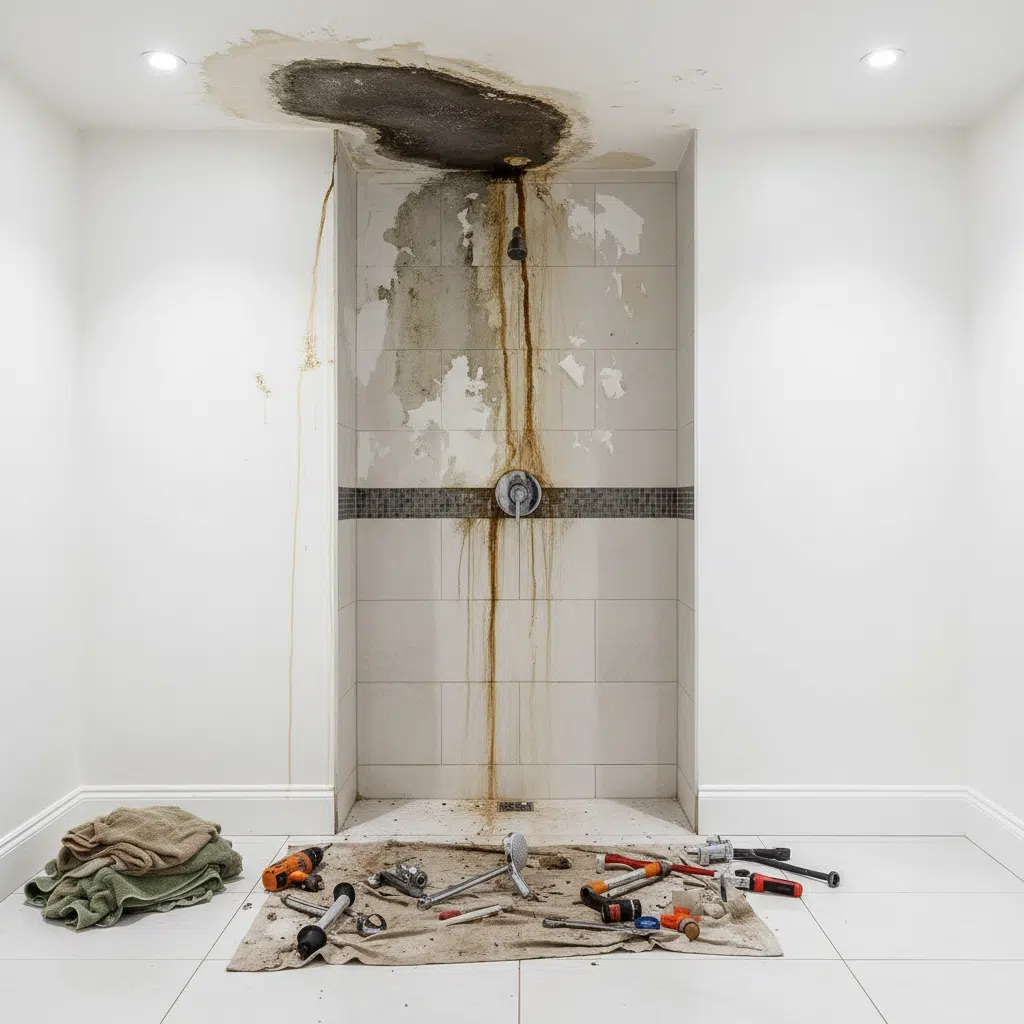

A hidden water leak inside your walls, under your slab, or beneath your yard can waste thousands of gallons of water and cause serious structural damage before you ever see a drop. Traditional leak detection methods often required tearing open walls or jackhammering through concrete floors just to find the source. Today, acoustic leak detection in plumbing systems allows trained technicians to pinpoint leaks with precision — without any demolition. If you live in Fort Myers, Cape Coral, or anywhere in Southwest Florida, understanding how this technology works can help you act fast when you suspect a hidden leak.
In this guide, we explain the science behind acoustic leak detection, when it is used, what to expect during the process, and why it is the preferred method for locating leaks in Florida homes built on concrete slab foundations.
What Is Acoustic Leak Detection?
Acoustic leak detection is a non-invasive method of locating water leaks by listening for the sound that pressurized water makes as it escapes through a crack, hole, or joint in a pipe. When water forces its way through a breach in the pipe wall, it creates a distinct sound — a hissing, whooshing, or rumbling noise depending on the pipe material, water pressure, soil conditions, and size of the leak.

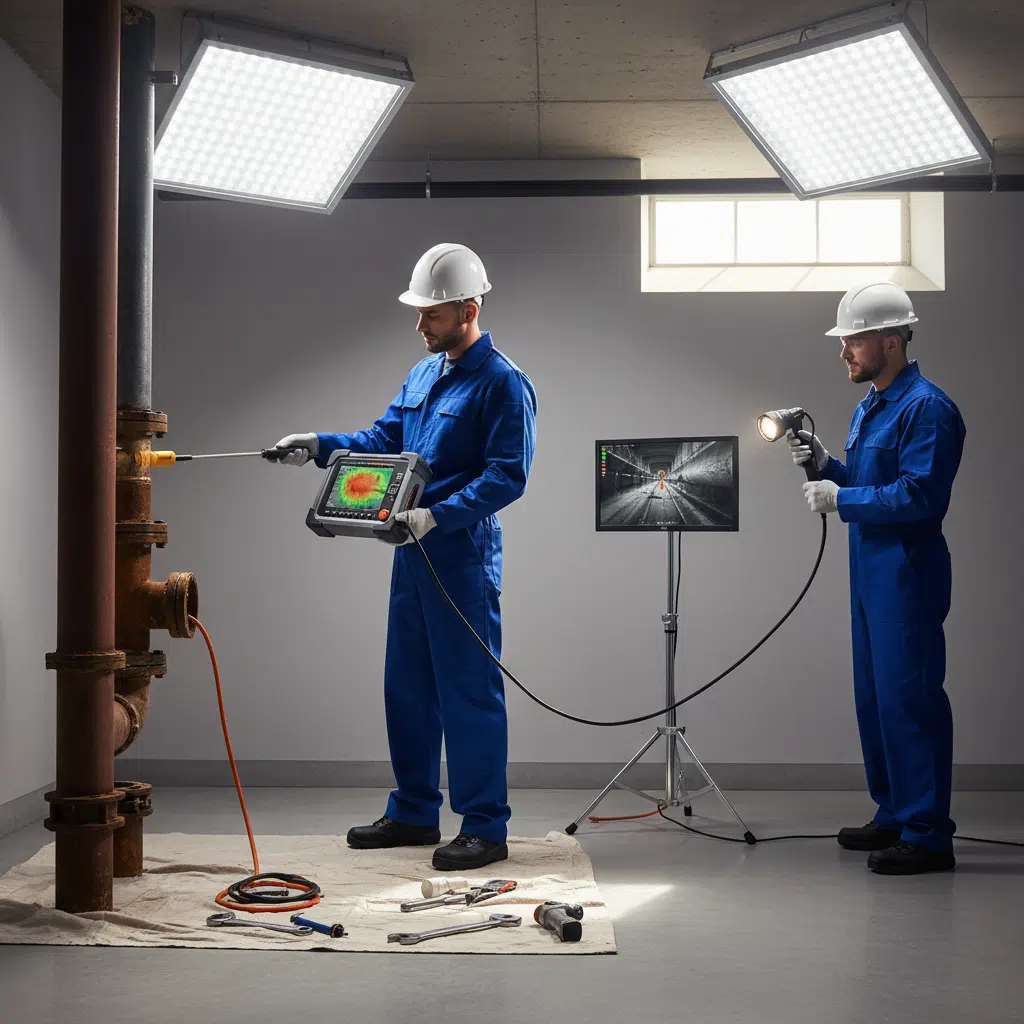
Trained leak detection technicians use specialized electronic listening devices that amplify these sounds and filter out background noise from traffic, appliances, wind, and other sources. The equipment typically includes ground microphones, acoustic sensors, and correlators that can process sound data from multiple points along the pipe to triangulate the exact location of the leak.
According to the U.S. Environmental Protection Agency, household leaks waste nearly one trillion gallons of water annually nationwide. Acoustic detection helps plumbers find and fix these leaks faster, reducing water waste and preventing costly property damage.
How Acoustic Leak Detection Works Step by Step
When a leak detection specialist arrives at your home, the process follows a systematic approach designed to narrow down the leak location with increasing precision.
Step 1: Pressure testing. The technician first confirms that a leak exists by isolating the water supply and monitoring the pressure gauge. A drop in pressure over a set period confirms an active leak in the system. This test also helps determine whether the leak is on the hot water side, cold water side, or in the main supply line.
Step 2: Acoustic scanning. Using ground microphones or contact sensors, the technician listens along the path of the suspected pipe. On slab foundations — which are standard in Fort Myers and throughout Lee County — this means placing the sensor directly on the tile, terrazzo, or concrete floor and slowly moving it in a grid pattern. The device amplifies the leak sound and displays the signal strength on a screen, allowing the technician to track the sound intensity as they move closer to or farther from the leak.
Step 3: Correlation. For longer pipe runs or when the leak sound is faint, technicians use a pipe correlator. This device places two sensors at known points on the pipe — typically at access points like valves, faucets, or cleanouts — and measures the time it takes for the leak sound to reach each sensor. Because sound travels through pipe at a known velocity (which varies by pipe material and diameter), the correlator calculates the exact distance from each sensor to the leak point.
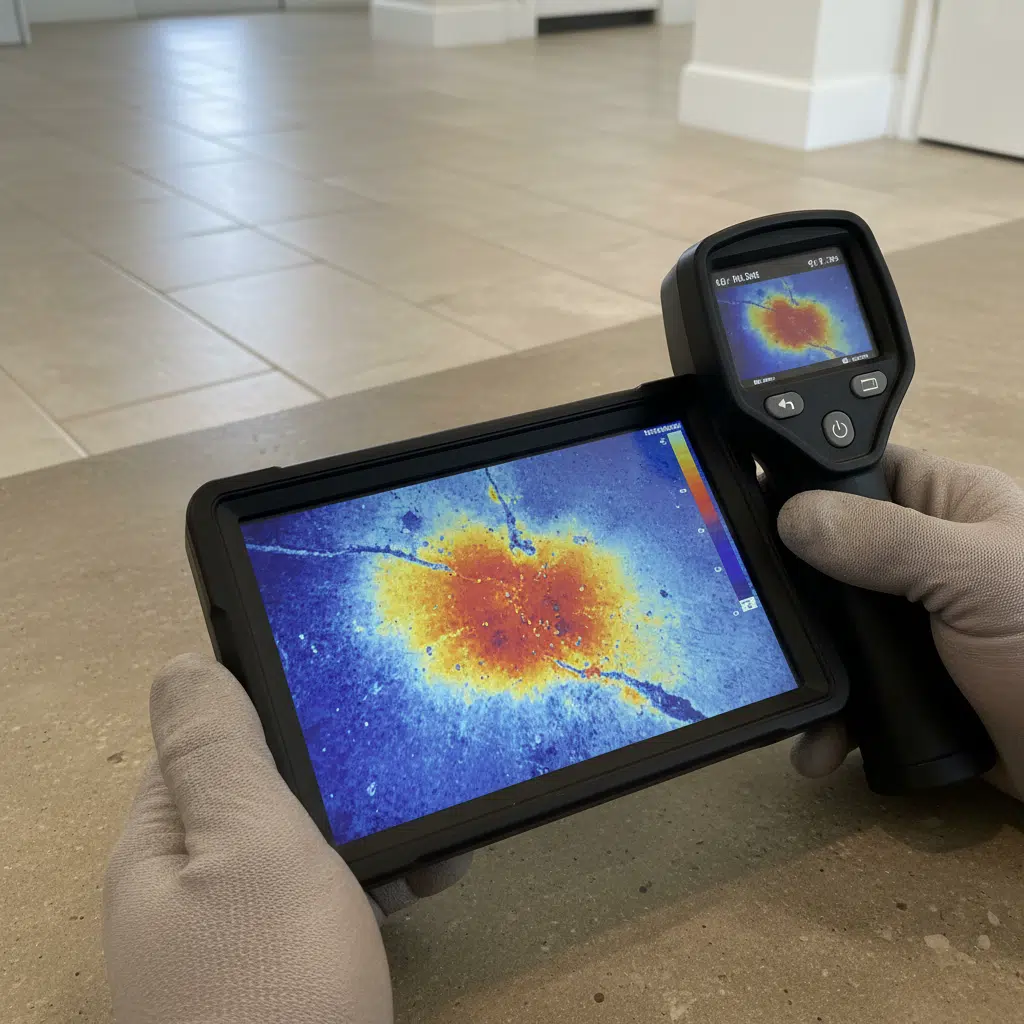
Step 4: Confirmation. Once the acoustic equipment identifies the likely leak location, the technician may use supplementary methods to confirm the finding. Thermal imaging cameras can detect temperature differences in the slab caused by hot water leaks. Moisture meters can measure elevated humidity in specific areas. These confirmation steps ensure that when the slab is opened for repair, the plumber goes directly to the leak without unnecessary exploration.
When Acoustic Detection Is the Right Choice
Acoustic leak detection is particularly effective in several common scenarios that Fort Myers homeowners encounter regularly.
Slab leaks are the most common application. In Southwest Florida, most homes are built on concrete slab foundations with copper or CPVC water lines embedded in or beneath the slab. When these pipes develop leaks — due to corrosion, shifting soil, or material fatigue — the only external signs may be a warm spot on the floor, a higher-than-normal water bill, or the sound of running water when all fixtures are off. Acoustic detection can locate these leaks within inches without breaking through the slab.
Underground supply line leaks between the water meter and the house are another ideal application. These pipes run through the yard and are often buried 12 to 18 inches deep. Acoustic sensors placed on the ground surface can detect the leak sound even through soil and turf.
Pool plumbing leaks in the supply and return lines buried around a swimming pool can be found acoustically when the pool is losing water but no surface damage is visible.

Acoustic detection works best on pressurized water lines because the water pressure creates a consistent sound at the leak point. It is less effective on gravity-fed drain lines where water flows intermittently and at lower pressure, though experienced technicians can sometimes detect drain leaks by introducing pressurized air or water into the drain system.
Acoustic Detection vs Other Leak Detection Methods
While acoustic detection is the most widely used method for slab and underground leaks, it is often used in combination with other technologies to ensure accuracy.
Thermal imaging uses infrared cameras to detect temperature variations on floors and walls. A hot water slab leak creates a warm spot that shows clearly on the thermal image. This method works well as a confirmation tool but cannot precisely pinpoint the leak location on its own because heat radiates outward from the source.
Tracer gas detection involves pressurizing the pipe system with a safe, inert gas (typically a hydrogen-nitrogen mix) and using a gas sniffer at the surface to detect where the gas escapes. This method is effective for very small leaks that produce minimal acoustic signatures, or for non-pressurized drain lines.
Video camera inspection uses a fiber-optic camera inserted into the pipe to visually inspect the interior. This method is standard for drain and sewer lines but is less practical for small-diameter water supply lines. It can confirm the location and severity of a leak but requires an access point for camera insertion.
An experienced leak detection technician on Marco Island or anywhere in Lee County will choose the right combination of methods based on the pipe type, leak symptoms, and building construction.
What Happens After the Leak Is Found
Once acoustic detection pinpoints the leak location, the repair process depends on where the leak is and what caused it. For slab leaks, the plumber will cut a small access hole in the concrete floor directly over the leak point, expose the damaged pipe section, and make the repair. The access hole is then patched with concrete and the flooring is restored.
In some cases — particularly when a home has had multiple slab leaks or when the pipes are severely corroded throughout — the plumber may recommend rerouting the water lines through the walls and attic instead of making another spot repair under the slab. This approach eliminates the risk of future slab leaks by abandoning the under-slab pipes entirely.
For underground yard leaks, the repair involves excavating to the pipe, replacing the damaged section, and backfilling. Most yard line repairs can be completed in a few hours.
For homeowners dealing with acoustic leak detection plumbing, getting clear guidance before a small issue turns into a larger repair can save time, money, and property damage.
Frequently Asked Questions About Acoustic Leak Detection Plumbing
How accurate is acoustic leak detection?
Modern acoustic equipment can locate leaks within six to twelve inches of the actual breach point in most conditions. Factors that affect accuracy include background noise levels, pipe material, pipe depth, and soil type. Experienced technicians in Southwest Florida consistently achieve high accuracy rates because they understand local building construction and soil conditions.
How much does acoustic leak detection cost in Fort Myers?
Professional leak detection in the Fort Myers area typically costs between $250 and $500 depending on the complexity of the situation and the number of methods used. This cost is separate from the repair itself but is well worth the investment to avoid unnecessary demolition and exploratory cutting.
Can I detect a slab leak myself?
You can identify signs of a slab leak — warm floor spots, higher water bills, running water sounds when fixtures are off — but pinpointing the exact location requires professional equipment and training. Attempting to open the slab without accurate detection often leads to multiple holes and significantly higher repair costs.
Does homeowners insurance cover leak detection?
Many Florida homeowners insurance policies cover the cost of leak detection and the resulting water damage repair, though coverage varies by policy. The leak detection fee itself is often covered when it leads to a covered repair. Contact your insurance provider before scheduling the service to understand your coverage.
How long does the leak detection process take?
Most residential leak detection appointments take one to three hours depending on the number of leaks and the complexity of the plumbing system. Simple single-leak situations on accessible slabs can be resolved in under an hour.
If you hear running water when nothing is on, notice a warm spot on your floor, or see an unexplained spike in your water bill, you may have a hidden leak that is wasting water and damaging your home. Contact Waterway Plumbing & Drain Cleaning at (239) 471-5068 to schedule professional acoustic leak detection. We serve Fort Myers, Marco Island, Cape Coral, and all of Southwest Florida with fast, accurate, non-invasive leak detection and repair.