Most homeowners don’t think about their plumbing until something breaks — but your insurance company thinks about it constantly. Water damage is a common source of homeowners insurance claims in Florida, which is one reason carriers pay close attention to plumbing risk. Certain plumbing problems spike your insurance premiums directly, and some can even get your policy non-renewed. Here are the five plumbing issues Florida insurers care about most — and what fixing them does to your rates.
At Waterway Plumbing & Drain Cleaning, we work with Fort Myers homeowners every week who discovered their plumbing issues through an insurance inspection rather than a plumber visit. Fixing these problems proactively costs a fraction of what you’ll pay in premium increases and claim headaches.
1. Polybutylene Pipes Still in Service
Polybutylene is the single biggest plumbing red flag for Florida insurance companies — and for good reason. These pipes, installed in an estimated 10 million U.S. homes between 1978 and 1995, have a documented failure rate that makes them uninsurable for many carriers.
Many Florida insurers will not write new policies on homes with polybutylene plumbing. If you’re buying a home in Fort Myers with poly pipes, expect difficulty finding coverage — and expect to pay significantly more for the policies you can get. Some carriers require a full repipe before they’ll issue a policy at all.
If you currently have coverage on a home with polybutylene, your insurer may require replacement at your next renewal inspection. Florida’s 4-point inspection — now required for homes over 20 years old by most carriers — specifically looks for polybutylene. When the inspector flags it, you’ll typically get a deadline to replace the pipes or face non-renewal.
Fort Myers was a hotspot for polybutylene installation during the building boom of the 1980s and early 1990s. Entire subdivisions in Gateway, Lehigh Acres, and Cape Coral were plumbed with poly. If your home was built during this era, a pipe material inspection is worth the $100-$200 investment — it tells you whether you’re sitting on a ticking clock.
The upside: replacing poly pipes with PEX often qualifies you for a premium reduction on your next policy term. Insurers recognize the risk reduction and adjust accordingly. The repipe pays for itself in reduced premiums over 5-10 years, plus you avoid the catastrophic failure risk.
2. Slab Leaks Going Undetected

Slab leaks — leaks in water supply or drain lines running beneath your concrete foundation — are among the most destructive and expensive plumbing failures in Florida homes. And because they’re hidden under concrete, they can run for weeks or months before you notice.
Insurance claims for slab leak damage average $10,000-$30,000 in Florida, covering water damage remediation, mold removal, flooring replacement, and foundation repair. That’s the claim payout — your cost is the premium increase that follows.
One slab leak claim can increase your homeowner’s insurance premium by 20-40% for the next 3-5 years. On a $3,000 annual premium, a single claim could cost you $3,600-$6,000 in additional premiums over the surcharge period. And that claim stays on your CLUE report, following both you and the property.
Annual leak detection testing catches slab leaks early, before they become insurance events. A professional leak detection test uses acoustic listening equipment and pressure testing to identify leaks you can’t see or hear. At $200-$400 per test, it’s cheap insurance against a five-figure claim. Early detection means a targeted repair rather than a full remediation project.
3. Water Heater Past Its Expected Lifespan
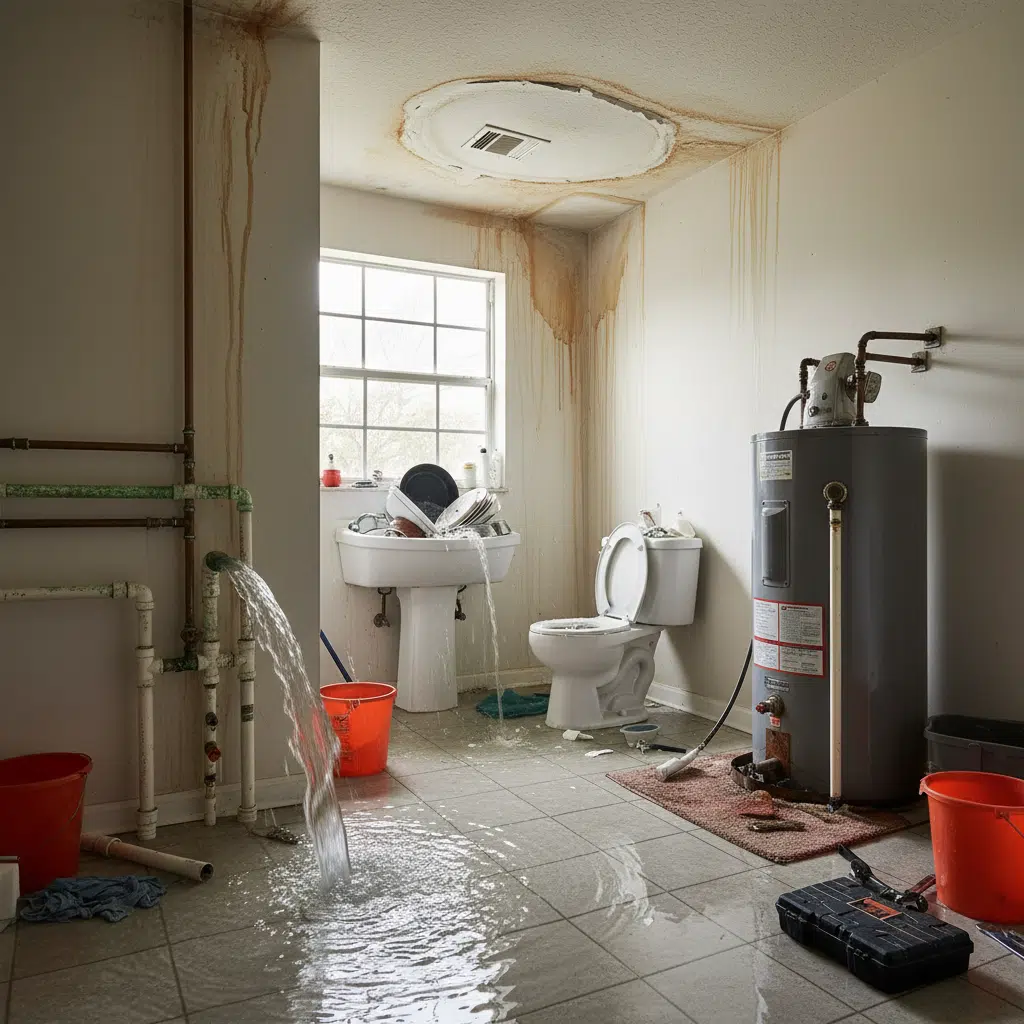
Your water heater is a 40-80 gallon tank of pressurized hot water sitting inside your home. When it fails catastrophically — and every tank water heater eventually will — the result is immediate and devastating flooding.
Standard tank water heaters have a 10-12 year lifespan. Insurers start flagging units older than 15 years, and for good reason. A burst water heater in a closet or attic can dump its full contents in minutes, causing $20,000+ in water damage to floors, walls, ceilings, and furnishings below. Attic-mounted water heaters are the worst-case scenario — 50 gallons of water pouring through your ceiling affects every room beneath it.
Some Florida insurers now require water heater replacement as a condition of policy renewal on older homes. The 4-point inspection includes water heater age and condition. A 20-year-old water heater with visible corrosion or a leaking drain valve is an automatic flag.
The fix is straightforward: replace water heaters at the 10-12 year mark, before they become an insurance issue. Installing a leak pan with a drain line beneath the tank contains small leaks. Adding an automatic shutoff valve — connected to a water sensor in the leak pan — kills the water supply if the tank fails, limiting damage to gallons instead of tens of thousands of dollars.
4. No Automatic Water Shutoff System
Smart water shutoff systems are rapidly becoming a factor in Florida insurance pricing. These devices monitor your water flow in real time and automatically shut off the main supply when they detect abnormal patterns — a burst pipe, a running toilet, or a supply line failure.
Several Florida insurers now offer 5-10% premium discounts for homes with monitored shutoff systems. On a $3,000 annual premium, that’s $150-$300 per year in savings — which means the device pays for itself within 2-3 years. More importantly, it prevents the catastrophic damage that leads to five-figure claims and multi-year premium surcharges.
These devices cost $300-$800 installed, depending on the model and whether they include app-based monitoring. Professional installation ensures proper placement at the main supply line and reliable Wi-Fi connection for alerts. Some systems integrate with smart home platforms and send alerts to your phone when they detect unusual flow patterns.
Not sure if your policy covers slab leaks or pipe bursts? Bassine Insurance Agency can review your homeowner’s policy and identify coverage gaps, exclusions for water damage, and potential discounts for plumbing upgrades. Understanding your policy before a claim happens — not after — is the difference between full coverage and a denied claim.
5. Previous Water Damage Claims on Record
Your claims history follows you — and your property — for years. Florida’s CLUE (Comprehensive Loss Underwriting Exchange) database tracks every insurance claim filed on a property, and water damage claims are the ones that hurt the most.
Even small water-related claims follow your property for 7 years in the CLUE database. When you shop for new insurance — or when your current carrier pulls your history at renewal — those claims factor into your pricing. A $2,000 water damage claim can cost you far more than $2,000 in premium increases over the next several years.
Two or more water-related claims in a 3-year period can trigger non-renewal from many Florida carriers. Once you’re non-renewed, finding replacement coverage is harder and more expensive. You may end up with a surplus lines carrier at 2-3x the standard premium rate.
The math is clear: proactive plumbing maintenance is cheaper than the premium increases from a single claim. Annual plumbing inspections, leak detection testing, water heater replacement on schedule, and pipe material assessment cost a few hundred dollars per year. A single water damage claim costs thousands in premium increases over years — plus your deductible, plus the inconvenience of repairs.
Document all plumbing upgrades and maintenance in writing. Keep receipts from inspections, repairs, and replacements in a dedicated folder. This evidence helps when shopping for new coverage — an insurer who sees documented maintenance history views your home as a lower risk than one with no maintenance records.
Protect Your Home and Your Premiums
Every plumbing problem on this list is fixable — and fixing them proactively costs a fraction of what you’ll pay in insurance premium increases, claim deductibles, and property damage. Waterway Plumbing & Drain Cleaning provides comprehensive plumbing inspections, leak detection, repiping, and water heater replacement across Fort Myers, Cape Coral, North Fort Myers, and Lee County. Call us at (239) 471-5068 to schedule an inspection and get ahead of your next insurance renewal.
Frequently Asked Questions
Does replacing polybutylene pipes lower my insurance premium?
Yes, in most cases. Florida insurers recognize the risk reduction when polybutylene is replaced with PEX or copper. Premium reductions vary by carrier, but 5-15% decreases are common. You’ll also avoid the non-renewal risk that comes with keeping poly pipes past your next 4-point inspection.
How long do water damage claims stay on my CLUE report?
Water damage claims remain on your CLUE report for 7 years from the date of loss. Both property CLUE (tied to the address) and personal CLUE (tied to you as the policyholder) retain the claim. This means the claim follows you even if you sell the property and buy a new one.
Is annual leak detection testing worth the cost?
At $200-$400 per year, leak detection testing is one of the best investments a Florida homeowner can make. A single slab leak claim averages $10,000-$30,000 in damage and can increase your premium by 20-40% for 3-5 years. Early detection through annual testing catches problems when they’re $500 repairs instead of $15,000 insurance events.